


David Newman | RXSG CEO & Expert Jump Rope Coach
When runners want to get faster, the typical answer is simple: run more.
More miles. More intervals. More tempo runs. More time on the track.
But what if one of the tools that could help improve your running performance isn't another running workout at all?
It might be a jump rope.
Research published in the International Journal of Sports Physiology and Performance examined whether adding jump rope training to the warm-up routines of amateur endurance runners could improve running performance. The results suggest that a surprisingly small amount of jump rope training may produce meaningful improvements—not only in jumping ability, but also in running performance.
For runners, functional fitness athletes, HYROX competitors, CrossFit athletes, and anyone looking to build more athletic feet and lower legs, the findings provide another compelling reason to add jump rope training to your weekly routine.

The Study: Jump Rope Training for Endurance Runners
The study, titled “Jump-Rope Training: Improved 3-km Time-Trial Performance in Endurance Runners via Enhanced Lower-Limb Reactivity and Foot-Arch Stiffness,” investigated 96 amateur endurance runners.
Participants were randomly divided into two groups. The control group continued its normal training routine, while the experimental group modified its warm-up to include jump rope training.
Here's where it gets interesting.
The runners weren't doing hour-long jump rope workouts.
The jump rope group trained just 2–4 times per week for a total of approximately 10–20 minutes per week over 10 weeks.
The jump rope training replaced five minutes of the athletes' normal warm-up activities before endurance training.
Researchers measured several factors before and after the 10-week period, including jumping performance, reactive strength, foot-arch stiffness, and 3-kilometer time-trial performance.
The jump rope group demonstrated significant improvements across the variables measured, while the control group did not show significant changes. Researchers also found that improvements in reactive strength and foot-arch stiffness were associated with improvements in 3K performance.
Their conclusion was that incorporating jump rope into the warm-up was effective at improving 3K time-trial performance, jumping ability, reactive strength, and arch stiffness in amateur endurance runners.
That's a lot of potential return from only a few minutes of rope work.
Read Full Article

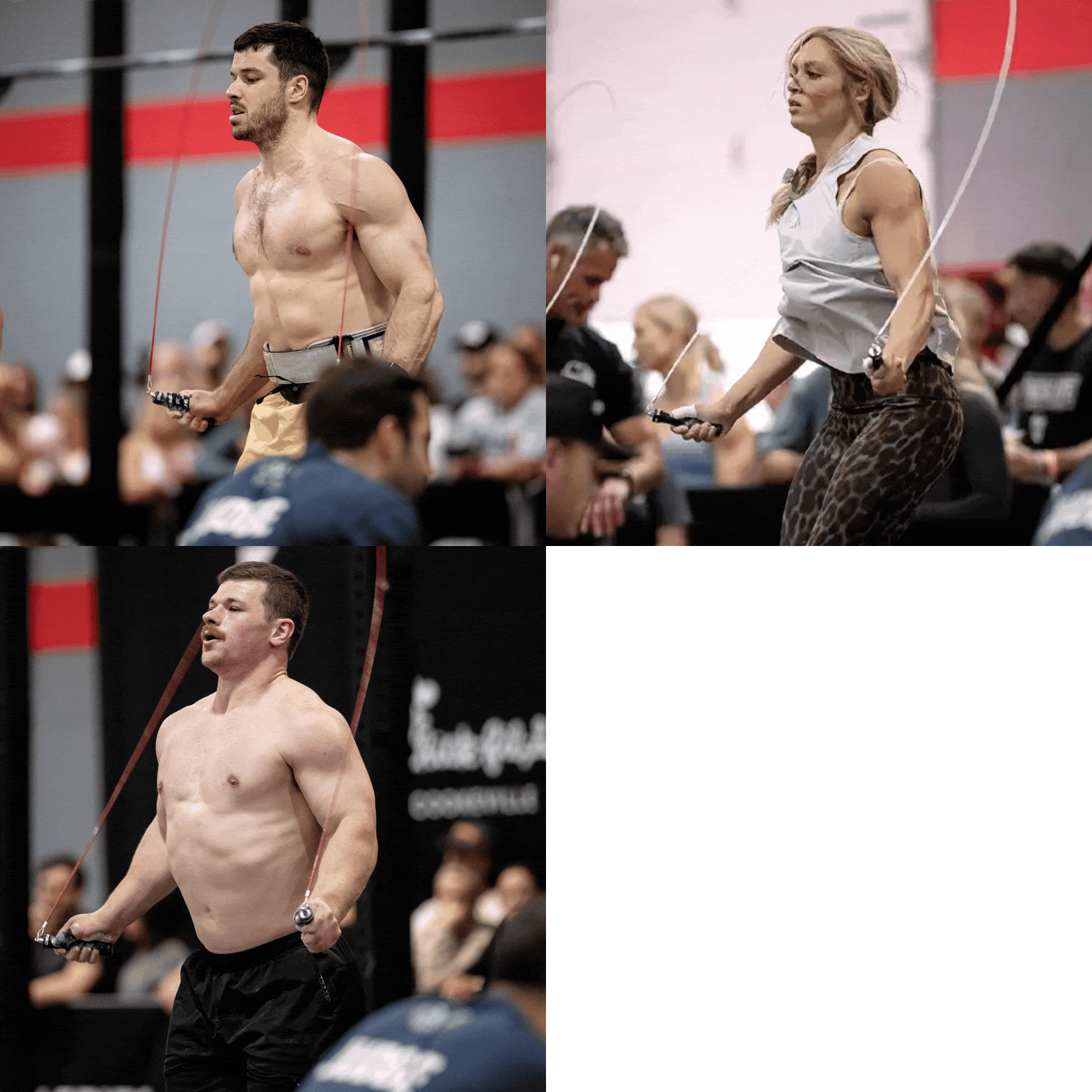



Why Can Jumping Rope Help Your Running?
Running and jumping rope might look like completely different activities, but mechanically they have more in common than you might think.
Both involve repeatedly absorbing force and rapidly returning that energy back into the ground.
The study describes jumping rope as a form of plyometric activity involving quick rebounds and significant involvement from the muscles and joints of the feet.
Think about what happens every time your foot hits the ground while running.
Your foot, ankle, Achilles tendon, calf and the rest of your lower-leg system must absorb force, stabilize the body and help propel you into the next stride.
Then it happens again.
And again.
And again.
Efficient runners need to do this quickly and repeatedly.
Jump rope training provides an opportunity to train many of those qualities through rhythmic, repetitive jumping.

1. Build More Reactive Feet One of the more interesting findings of the study was related to a reactive strength.
Reactive strength is your body’s ability to go from absorbing force to producing force quickly.
Think of your lower body like a spring.
When that spring contacts the ground, you don't want it to collapse and slowly rebuild tension. You want it to absorb energy and quickly rebound.
That’s exactly what happens in effective jump rope training.
Good jump rope form has you staying pretty close to the ground and producing quick, controlled rebounds rather than doing big vertical jumps.
At Rx Smart Gear, we stress positioning, mechanics, and timing because jumping successfully is more than simply trying to jump higher or spin the rope harder.
It's about learning to move efficiently.
For runners, that same emphasis on efficient ground contact may have significant value.

2. Build Stronger, More Functional Feet
Your feet are your connection to the ground.
Yet they're often overlooked in traditional strength and conditioning programs.
The researchers specifically examined foot-arch stiffness and found improvements in the jump rope group. Improvements in arch stiffness were also associated with improvements in 3K time-trial performance.
That doesn't mean that “stiffer is always better” or that jumping rope is a cure-all for foot problems. What it does suggest is that the mechanical qualities of the foot can play an important role in athletic performance.
Every jump rope repetition requires the feet and ankles to repeatedly stabilize, absorb force and rebound.
A five-minute jump rope session can accumulate hundreds of these contacts.
Performed with proper mechanics and sensible progression, that makes the jump rope a simple way to challenge the lower leg and foot complex without needing a gym full of equipment.

3. Improve Rhythm and Coordination
Running is a rhythmic activity.
So is jumping rope.
Once you move beyond simply trying to clear the rope, jump rope training becomes an exercise in coordinating your hands, wrists, feet and body around a consistent rhythm.
The goal is to make movement repeatable and efficient.
This is one of the reasons we don't believe athletes should view jump rope simply as a conditioning punishment.
Jumping rope is a skill.
Learning singles, alternating-foot steps, running steps, double unders, crossovers and other skills requires progressively greater levels of timing and coordination.
The better your mechanics become, the less wasted movement you need to complete each repetition.
That's an athletic quality that can carry far beyond the jump rope.

4. Get More Training Without Adding More Miles
Perhaps the most practical takeaway from this research is how little jump rope training was required.
The experimental group accumulated only about 10–20 minutes of jump rope training per week.
That's important for runners because increasing mileage isn't always the only answer to improving performance.
Training has to be balanced with recovery.
Jump rope training offers another way to challenge coordination, reactive strength and lower-limb function without simply prescribing another run.
Even better, a jump rope fits in your gym bag, backpack, suitcase or car.
You can train at the track, in the gym, in your garage or almost anywhere you have enough space.

How Runners Can Start Jump Rope Training
If you're a runner who hasn't jumped rope consistently before, don't begin by trying to complete thousands of repetitions.
Treat jump rope the same way you'd treat a new running program: build volume progressively.
Start by developing a relaxed single-under.
Keep your body tall, your elbows positioned close to your sides and allow the wrists—not the entire arms—to control the rope.
Your jumps should be low and efficient rather than exaggerated.
From there, try short intervals such as:
30 seconds jumping / 30 seconds rest
Repeat for five rounds.
That's only five minutes.
As your coordination and lower legs get used to it, you can increase the time, decrease rests or increase skills.
More experienced athletes can incorporate alternating-foot jumps, running steps, double unders, crossovers or heavier ropes depending on their training goals.
The objective isn't simply to survive five minutes of jumping.
The goal is to become better at jumping.
Quality comes first.

Choosing the Right Jump Rope Matters
Just like running shoes, not every jump rope provides the same training experience.
A very light speed rope provides minimal feedback and can be excellent when an experienced athlete's primary objective is maximum rope speed.
But athletes learning proper mechanics may benefit from a rope that provides greater feedback.
Knowing the rope that is spinning around you helps you with timing and making adjustments.
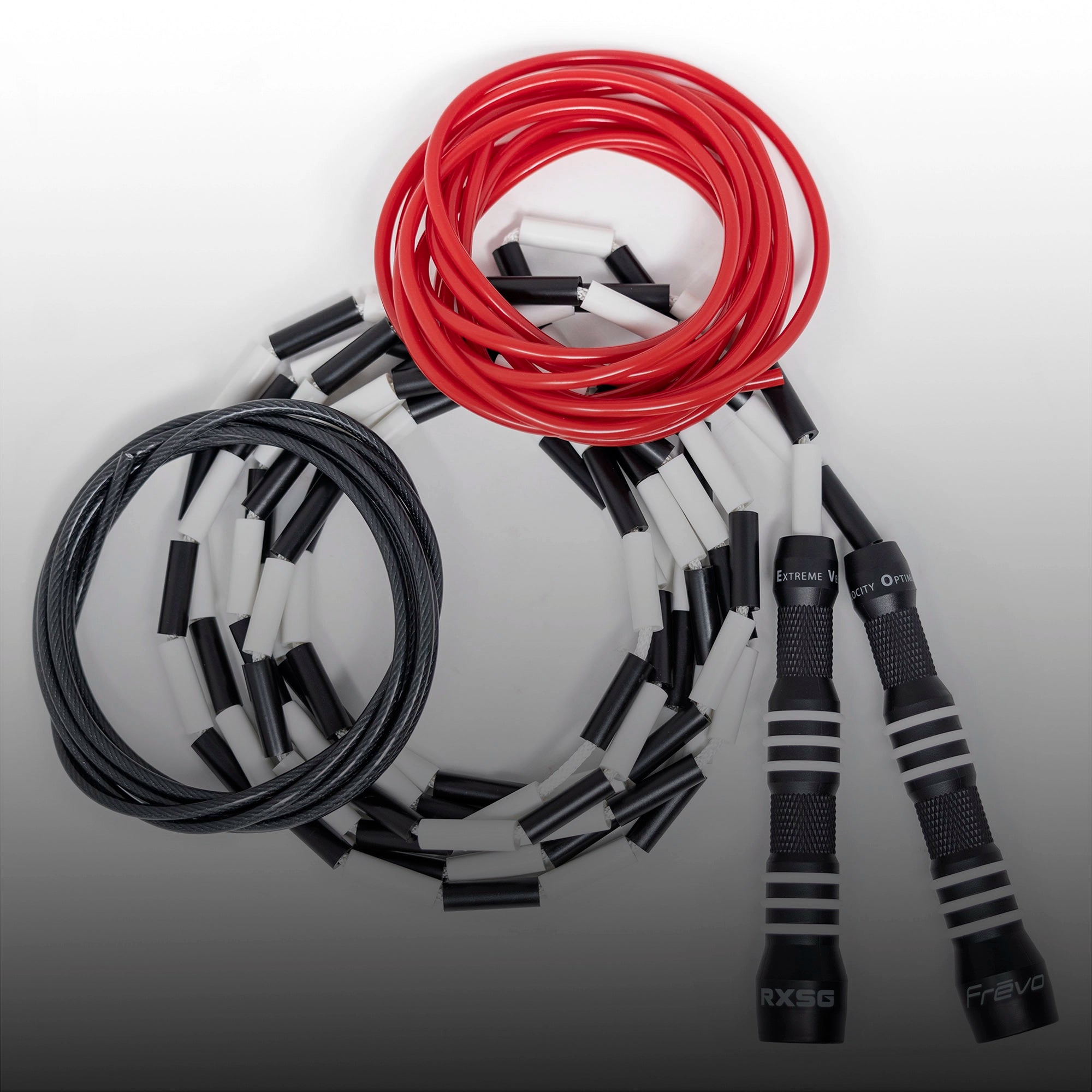
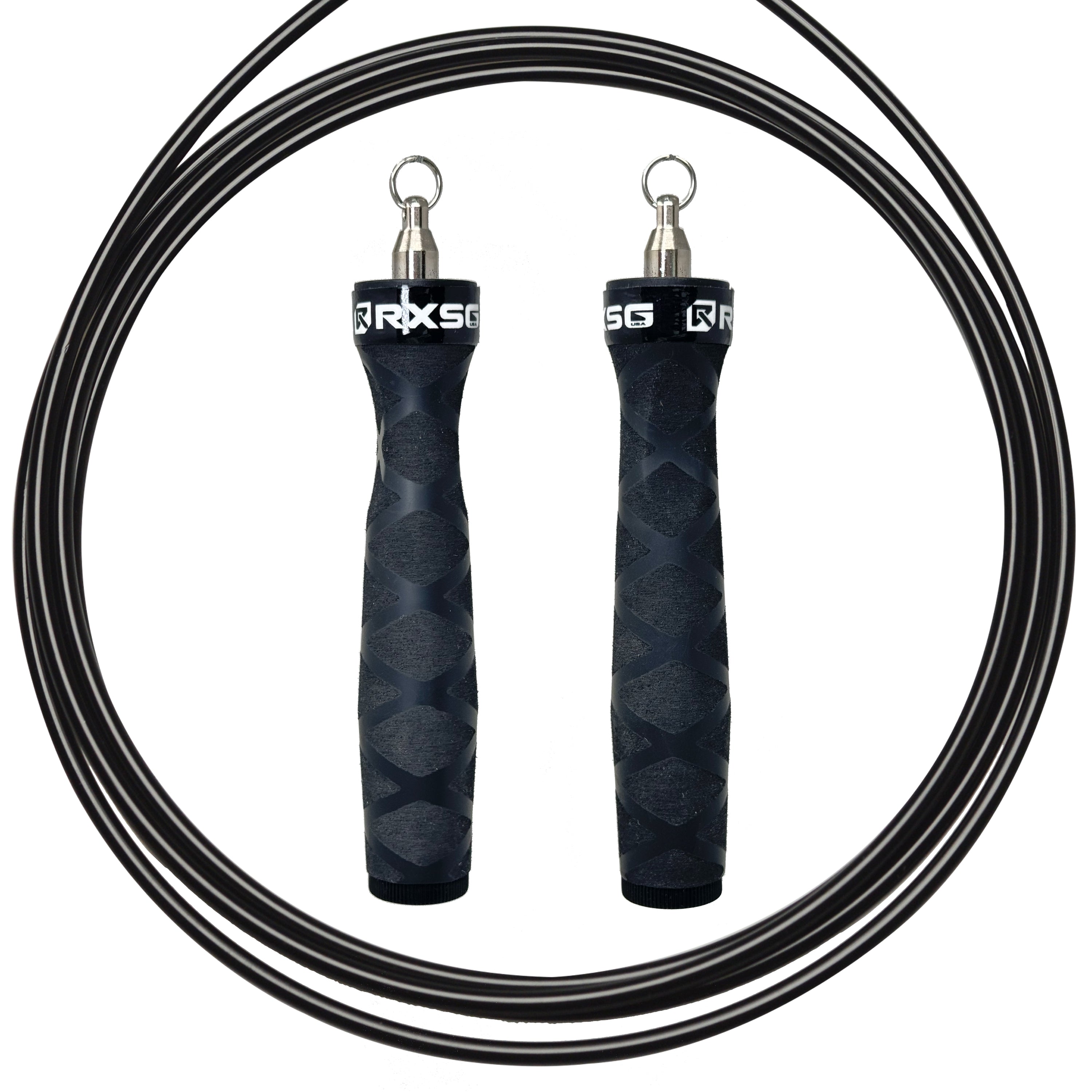
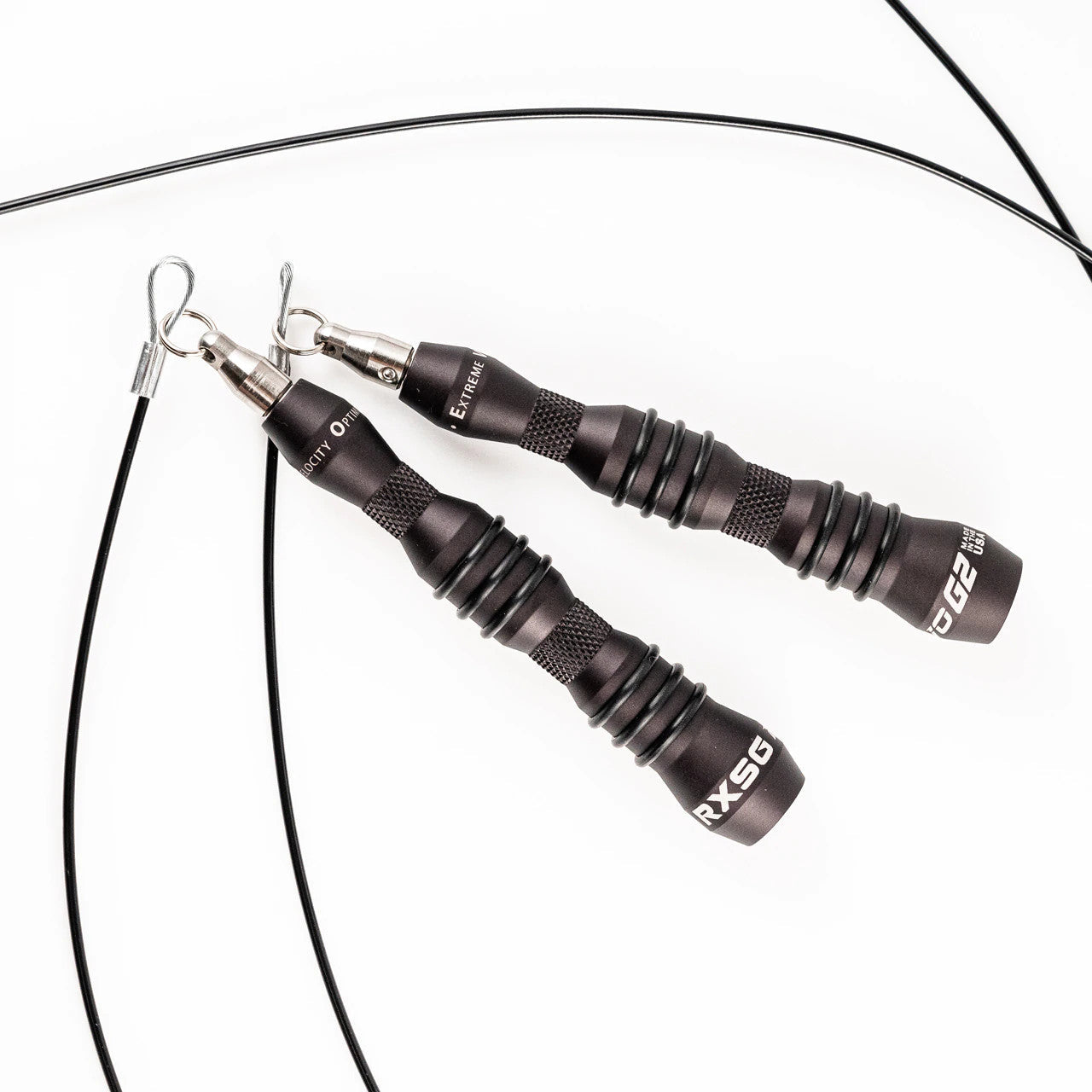
That’s why Rx Smart Gear offers a variety of jump rope setups to suit different athletes and training goals.
Whether you're a runner adding jump rope to your warm-up, an athlete developing double unders or someone progressing toward advanced skills, selecting the right rope can make the learning process much more productive.

The takeaway from this research isn't that runners should replace running with jumping rope.
It's that becoming a better runner can involve training more than your cardiovascular system.
Your feet matter.
Your ankles matter.
Your ability to absorb and return force matters.
Your coordination matters.
Your reactive strength matters.
And according to this study, adding only 10–20 minutes of jump rope training per week for 10 weeks was enough to produce improvements in several of these qualities along with improved 3K time-trial performance in amateur endurance runners.
That's a powerful argument for keeping a jump rope in your running bag.
At Rx Smart Gear, we've spent years treating jump rope as what it truly is: a trainable athletic skill.
Learn the positioning.
Develop the mechanics.
Master the timing.
Then slowly push yourself with new skills, different rope weights and more demanding training.
Because the jump rope is not just to learn double unders,
It may also help you become a better athlete—and a faster runner.
Ready to Add Jump Rope Training to Your Running Routine?
Whether you're warming up for your next run, improving footwork and coordination, or looking for a portable training tool you can take anywhere, Rx Smart Gear has a rope designed for your training goals.
Find your rope, start with the fundamentals, and discover what a few minutes of jump rope training can add to your performance.
References
Research reference: García-Pinillos F, Lago-Fuentes C, Latorre-Román PA, Pantoja-Vallejo A, Ramirez-Campillo R. “Jump-Rope Training: Improved 3-km Time-Trial Performance in Endurance Runners via Enhanced Lower-Limb Reactivity and Foot-Arch Stiffness.” International Journal of Sports Physiology and Performance. 2020;15(7):927–933.